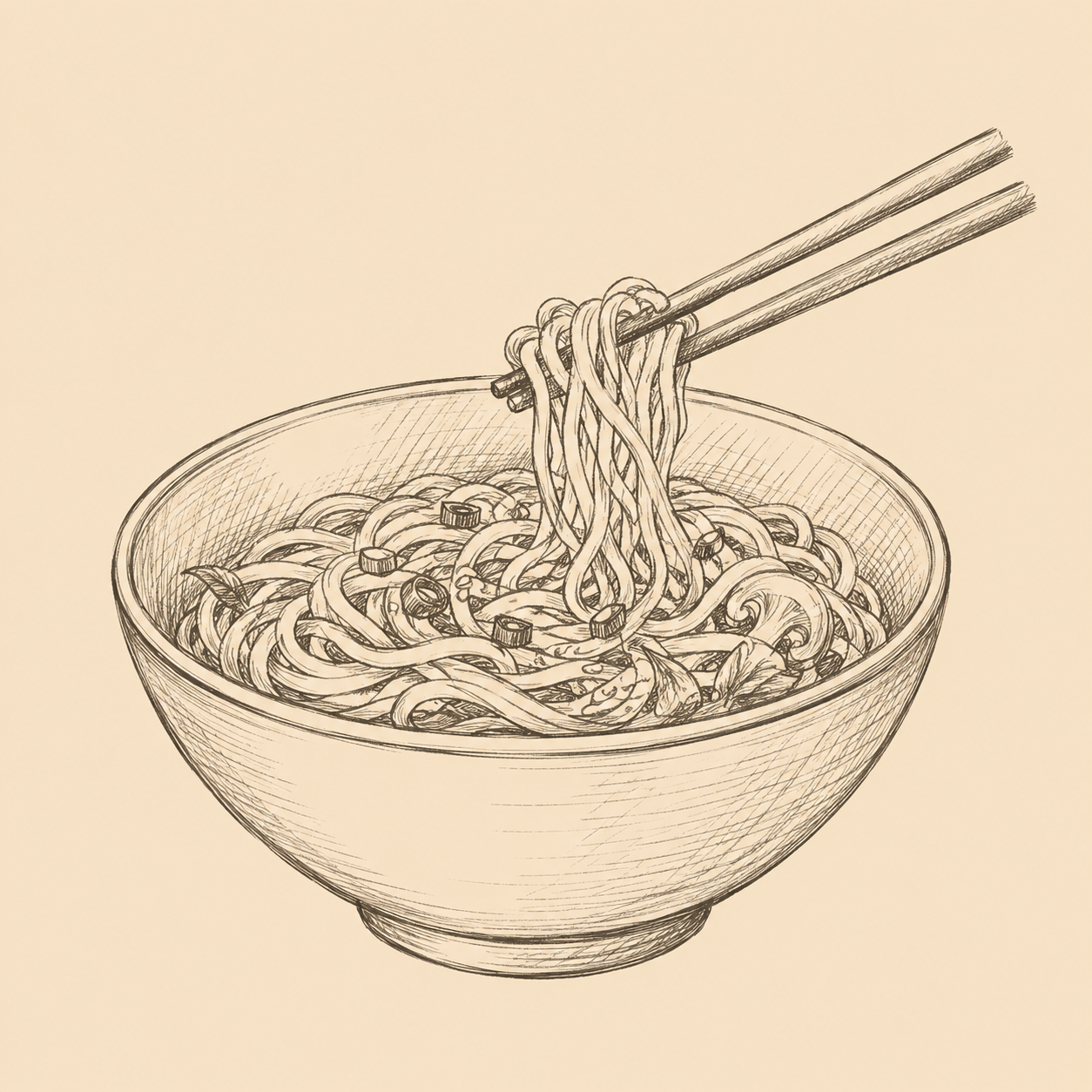
E veryone has that one dish. The one that doesn't need a reason, doesn't need a occasion, doesn't need to be good for you. The one you make at 11pm when the day has been too long and your brain is fried and you just need something that tastes exactly like itself and nothing else. For me that dish is Schezwan noodles. Not the restaurant version, not the takeout box version — my version. The one I've made so many times I don't measure anything anymore. The one that fills the kitchen with a smell so good it feels unfair to anyone who isn't there.
What Schezwan Actually Is
Let's get this out of the way — Schezwan as Indians know it is not authentic Chinese food. It's an Indo-Chinese invention, born in the Chinese immigrant community in Kolkata and evolved over decades into something that belongs entirely to this country. It borrows the name from Sichuan province but the flavour is its own thing — heavier, oilier, louder, built for people who want heat that doesn't apologise.Schezwan sauce isn't a condiment. It's a personality. Once it hits the pan, everything else in the kitchen knows its place.The heart of the whole dish is Schezwan sauce — a paste of dried red chillies, garlic, ginger, and oil that's been cooked down until it's thick, dark, and deeply fragrant. You can make it from scratch and it's worth it. You can also buy a good jar and nobody needs to know.
The Ingredients That Actually Matter
Most of the noodle dish is technique, not ingredients. But a few things make a real difference.The noodles: Hakka noodles are the move. Boil them just short of done — they'll finish cooking in the wok. Overcooked noodles go limp and sad and the whole thing falls apart.
The heat: You need a high flame. This is the part home cooking usually gets wrong. A proper wok on full heat, oil shimmering, ingredients hitting the pan and sizzling immediately. That char, that slight smokiness — that's what makes it taste like something and not just stir-fried noodles with sauce.
The Schezwan sauce: Two generous tablespoons minimum. Don't be timid. The dish is called Schezwan noodles, not noodles with a hint of Schezwan.
The Recipe
Recipe
Schezwan Spicy Noodles
Serves 2 · 15 minutes
What you need
- 200g Hakka noodles (depends how much u can eat :)
- 2 tbsp Schezwan sauce (more if you're brave)
- 1 tbsp soy sauce
- 1 tsp rice vinegar
- 1 tsp chilli oil
- ½ tsp sugar
- 4 cloves garlic, minced
- 1 tsp ginger, grated
- 1 small onion, thinly sliced
- ½ capsicum, julienned
- 1 medium carrot, julienned
- 2 stalks spring onion, chopped (whites and greens separated)
- 2 tbsp neutral oil
- Salt to taste
How to make it
- Boil noodles in salted water for 1 minute less than the packet says. Drain, toss with a little oil so they don't stick, set aside.
- Mix Schezwan sauce, soy sauce, vinegar, chilli oil, and sugar in a small bowl. Set aside.
- Get your wok or pan very hot. Add oil and let it shimmer.
- Add garlic, ginger, and spring onion whites. Toss for 30 seconds — it should sizzle hard.
- Add onion and vegetables. Stir fry on high heat for 2–3 minutes. Keep it moving.
- Add the sauce mixture. Toss everything to coat.
- Add the noodles. Toss aggressively for 2 minutes until every strand is coated and slightly charred at the edges.
- Taste. Adjust salt. Add more Schezwan sauce if it needs it — it probably does.
- Top with spring onion greens. Eat immediately.
Why This Specifically Is Comfort Food
Comfort food isn't about nutrition or sophistication. It's about reliability. Schezwan noodles taste the same every time I make them and that sameness is the whole point. When everything else is unpredictable, this dish is not. The garlic hits the hot oil and makes that sound and I already feel better before I've eaten a single bite.The garlic hits the hot oil and makes that sound and I already feel better before I've eaten a single bite.There's also something about food that punches you in the face a little. Comfort doesn't always mean gentle. Sometimes it means loud and spicy and immediate — something that demands your full attention and leaves no room in your head for whatever was bothering you before you started cooking.
That's what this is. Twenty five minutes, one pan, and whatever the day was before it doesn't matter as much.